A quiz night can look simple on paper: find a room, read some questions and raise money. The difficult moments usually happen between those steps. Someone has to welcome late arrivals while the host explains the rules. Someone has to collect sheets without losing a team's name. Someone has to explain what the evening's proceeds will support. Start by designing those handovers, then choose the questions that fit.
This planning example follows the fictional River Hall Community Group, which is raising money for an equipment fund. Its first event uses six rounds of ten questions, paper answers and volunteer marking. The figures and timetable below are illustrative. The group must confirm its actual venue arrangements and any local fundraising requirements before inviting people or taking money.
1. Write a brief that another volunteer could explain
Put the beneficiary, purpose, date, team size, entry arrangement and contact person on one page. River Hall describes an equipment fund rather than making a vague promise that every dollar will go to a good cause. Its organizers expect event costs, so they plan to report net proceeds after those costs. Decide who is authorized to speak for the beneficiary and approve the wording before it appears on posters.
Define the first version of the evening tightly enough to run. River Hall's example excludes a raffle, bar, food service and separate donation collection. Each would introduce another workflow and potentially different requirements. If your group wants one, name the person who will investigate and operate it. An attractive extra without an owner is an unfinished part of the plan, not extra fundraising income you can safely count.
2. Turn the room into a practical team limit
The example offers up to twelve teams of four: forty-eight player places. That is not a statement that the room holds forty-eight people in total. The host, markers, welcome volunteer and other attendees also count toward the venue's actual occupancy arrangements. Confirm the permitted layout with the venue and reduce the team allocation if necessary. A spreadsheet's twelve rows do not establish a safe room capacity.
Walk the route from arrival to a table, toilets and the exit with the venue contact. W3C's event guidance recommends asking about access needs and checking that participants can use the venue and presentation. For this quiz, read prompts aloud and show them clearly; agree useful alternative arrangements before play where possible. These practical choices still need a check in the actual room.
Look from the back table toward the screen and listen to a trial question. A readable laptop screen at the front tells you little about the experience beside a noisy doorway. Record unresolved issues with a named owner and a deadline. Do not advertise a particular accommodation until you know how the venue and team will provide it.
3. Assign jobs at the moments they overlap
Name a host, a welcome and collection lead, a marker and an independent score checker. A small group may combine some jobs, but only after walking through their timing. The host cannot give an undistracted repeat of question seven while sorting a payment query at the door. Mark who covers a helper's break and who can pause the quiz when a problem needs attention.
Give each helper a short role card with their first action, handover partner and escalation contact. HSE's Great Britain event guidance emphasizes coordination and briefings across setup, the event and breakdown. Use it as a planning reference within its jurisdiction; confirm the requirements for your own location. A quiz workbook does not replace the venue's arrangements or specialist help where needed.
4. Give collection and checking their own time
River Hall's fictional schedule opens doors at 18:30 and explains the rules at 19:00. Three twelve-minute rounds run from 19:10 to 19:46, followed by a fifteen-minute break. The last three rounds run from 20:01 to 20:37. Final checking and challenges have thirteen minutes, ties have a ten-minute reserve, and results and thanks run from 21:00 to 21:10. This is a rehearsal starting point, not a guaranteed finish time.
A twelve-minute round includes reading, thinking, repeats and collecting ten answers. Try it with the longest prompts and your actual handover route. If it feels rushed, lengthen the timetable before selling the experience. Keep a visible host copy with collection checkpoints; never solve a delay by revealing answers while a team's sheet is still open.
5. Rehearse the files as a sequence
Open the participant presentation on the equipment you will actually use. Keep the host answer pack out of the projected window. Move from a round title to its first question, collect a test sheet, mark it and enter its score. Include a deliberately missing team number and a disputed answer so helpers practice resolving them before the real evening.
Keep a printed host pack and usable paper scoring route available if the screen or workbook fails. Save a known final copy of each file together and label older copies clearly. If you edit a question, change its answer guidance and slide as one revision, then recheck both. A presentation that opens successfully has not yet passed a full event rehearsal.
6. Make a clear go-or-change decision
Before promotion, review the venue confirmation, helper coverage, workable budget and file rehearsal. Name the last date on which low bookings would trigger a smaller event, revised costs or cancellation under your stated arrangements. After the event, record receipts, expenses, net proceeds and what the beneficiary actually received. That closes the promise made in the original brief.
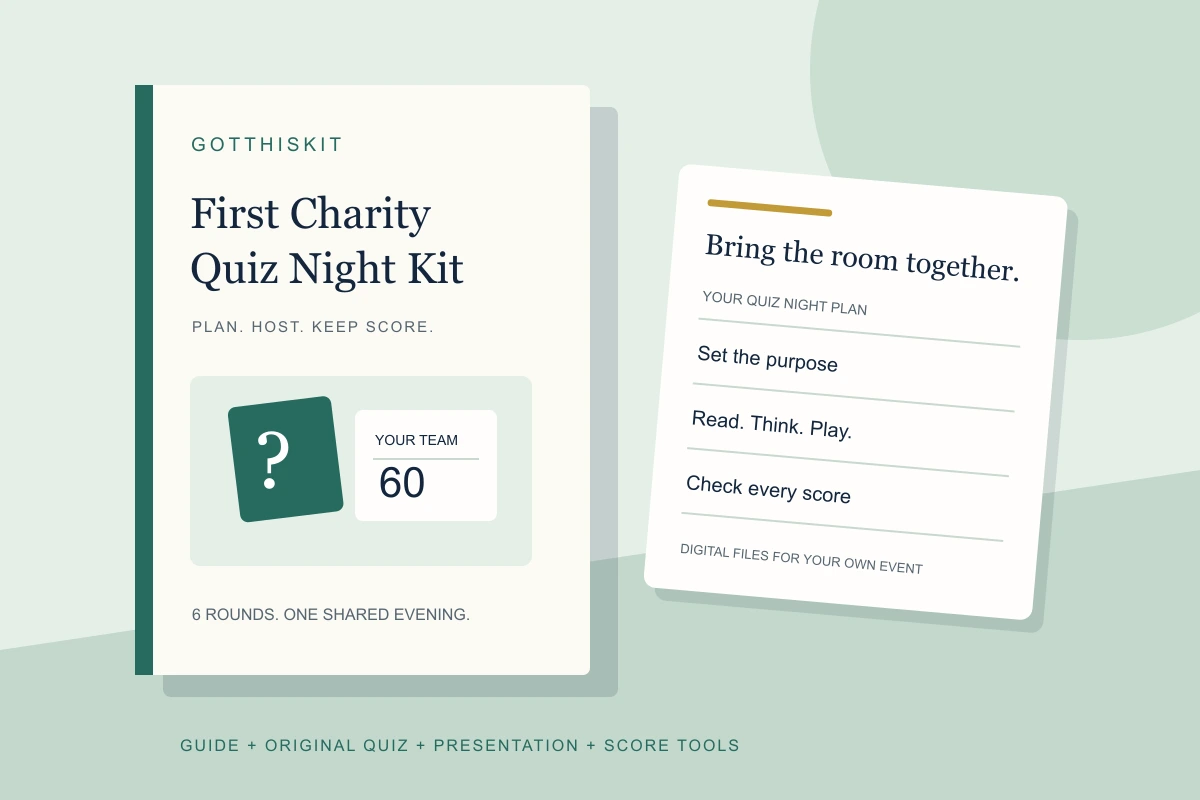
The First Charity Quiz Night Kit brings an organization guide, original quiz and host answers, printable team sheets, an editable participant presentation and a scoring workbook into one package. Adapt its fictional example to your group, check the actual files and rehearse the complete evening with the people who will help run it.
A workable first quiz starts with confirmed people, space and handovers. Rehearse the whole evening, including the quiet administrative steps between questions.