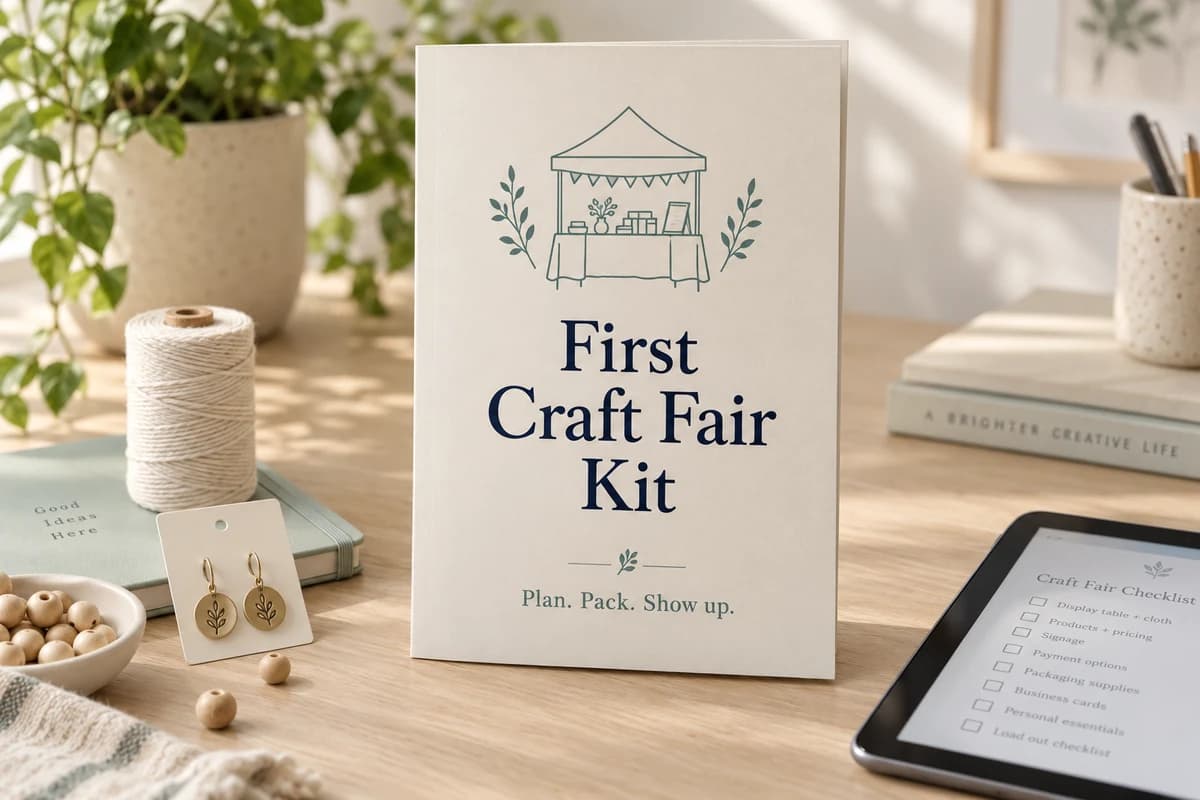
Your first fair is in the calendar. There is a box of finished work, a tablecloth somewhere, and a list that keeps getting longer. Packing feels easier when you stop thinking about everything you might need and start walking through the day in order.
Use five small groups: arrival, display, stock, customer handover, and your own essentials. You can adapt each group to your products and the event, then tick things off as they go into a box.
1. Start with the space you have booked
Before buying another display stand, read the organizer’s information and collect the details that affect packing. Put the answers at the top of your list so you can find them on the morning of the fair.
Separate confirmed details from questions. If you are waiting to hear whether a chair is supplied, write “chair — check with organizer” instead of quietly assuming one will be there. Give yourself a date to resolve each open question.
- Table dimensions and what furniture is supplied.
- Arrival time, unloading instructions, and where to check in.
- The organizer’s display requirements and contact details.
2. Give your table a quick rehearsal
Mark out the table dimensions at home and arrange the pieces you plan to use. Leave room to wrap a purchase and talk to someone without shifting half the display. Put your signs in place too: they take up space that is easy to forget.
Take a reference photo once the arrangement feels workable. Then pack the display pieces together, with the cloth and signs near the top. A rehearsal can also show you which decorative extras you are happy to leave behind.
3. Make stock easy to find
Group products in a way that makes sense to you: by collection, size, or product type. Write a simple opening count for each group. The goal is to know what you brought and where to find another piece when the display needs topping up.
Label containers on a side you can see when they are stacked. Keep a short contents list with your plan, especially if several boxes look alike. Set aside the pieces needed for the initial display so unpacking has a clear starting point.
4. Walk through one customer handover
Imagine someone choosing an item. Where will you put it while they pay? Where is the packaging? How will you record that it has sold? Follow that sequence once with your actual setup and add the missing items to your list.
Check the payment method you intend to use before the event. Keep the everyday things you reach for together, rather than spreading them across your stock boxes.
- Your chosen payment setup and any charging items it needs.
- Bags or wrapping suitable for your products.
- A pen, your stock record, and any customer information cards.
5. Finish with a morning-only list
Some things cannot go into a box the night before. Put your phone, water, lunch, and other last-minute items on a separate short list. Keep that list with whatever you pick up before leaving.
After the fair, add three notes while the day is fresh: what you used often, what stayed in its box, and what you wished you had brought. Your next packing list can start there.
Start with one box and one part of the day. A useful packing plan tells you what belongs together, where it goes, and what still needs confirming.