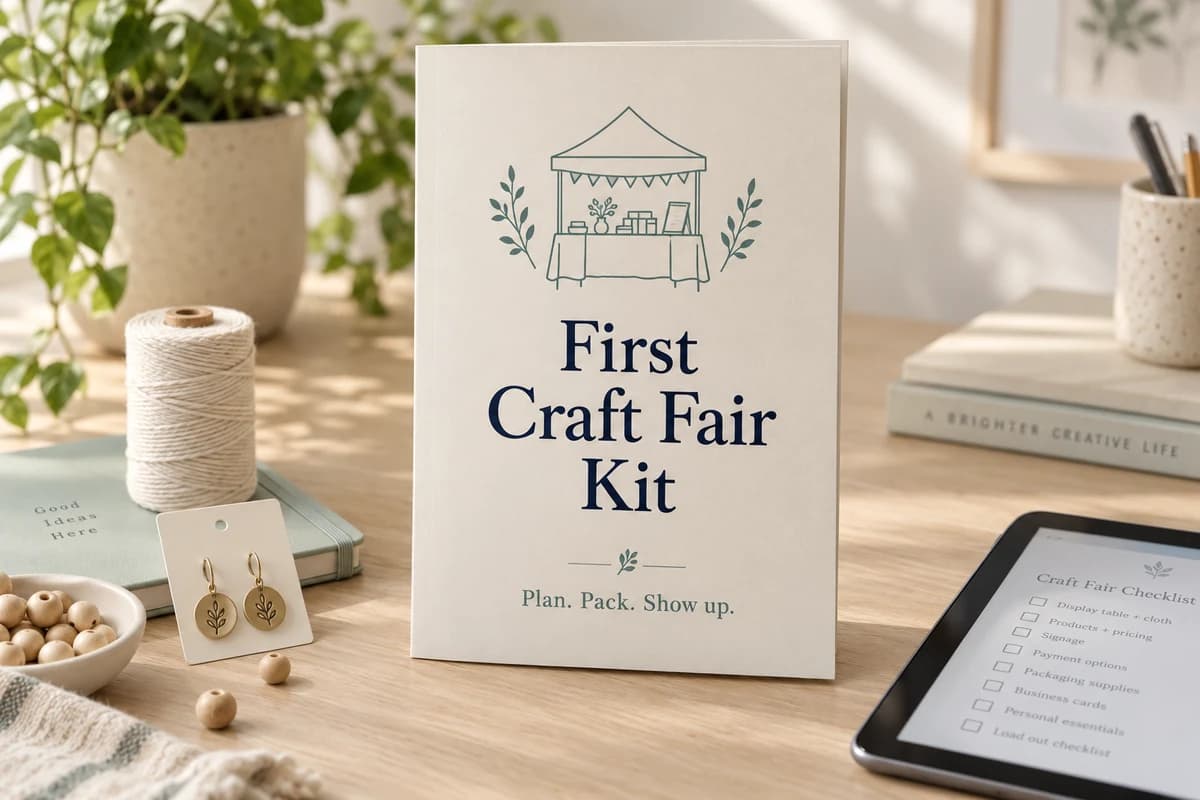
A beautiful event poster can make a craft fair feel like the obvious next step. Before you book, give yourself a small planning pause. The useful question is whether you can prepare for this particular event with the time, stock and equipment you have.
You do not need a perfect forecast to decide. You do need enough confirmed information to understand what you are committing to. Create one page with three headings: confirmed, still to ask, and my decision. Keep the organizer’s answers beside the details that matter to you.
1. Picture the space you are actually booking
Find out what the booking includes. A table, an empty pitch and a covered stand ask different things of your preparation. Record the usable dimensions, furniture supplied, display restrictions and whether your position will be indoors or outside. Ask for clarification when a phrase could mean several things.
Then imagine your own products in that space. Can a visitor see what you make? Can you package a purchase without dismantling the display? Where will spare stock go? A simple sketch can reveal that the attractive stand you imagined needs equipment you do not own yet. Add that equipment to your decision before committing.
2. Walk through arrival and departure
The advertised opening hours are only one part of your day. Ask about unloading, setup, check-in, parking and pack-down. Write a rough timeline from leaving home to returning, including the preparation that happens before the doors open.
For an illustrative example, imagine a maker who can attend the public opening hours but cannot reach the venue during the required setup window. The event may be appealing, yet the practical fit is wrong. Discovering that before booking is a useful decision, not a missed opportunity. If a friend will help, confirm their availability against the whole timeline.
3. Read what the organizer actually offers
Separate descriptions from commitments. Ask who the event is intended for, how visitors find out about it and what information exhibitors receive. You can use that context to consider whether your work belongs there without turning an attendance estimate into a sales forecast.
Read the booking terms yourself. Note the fee, what it covers, payment timing, cancellation arrangements and any requirements the organizer sets for sellers. Ask the organizer to clarify unclear terms in writing. The checklist here is a planning aid; it does not replace reading the actual agreement or checking requirements for your particular products.
- What exactly is included in the fee?
- Which display, product or equipment rules affect my setup?
- When will I receive the final arrival information?
- Who is my contact if an important detail changes?
4. Count the preparation you can realistically do
List the work that must happen before the fair: finish stock, check labels, prepare signs, rehearse your table, organize packaging and test your chosen payment setup. Put an owner and a date beside each task. For a one-person business, that owner may always be you; the dates still help expose a crowded week.
Distinguish necessary preparation from nice additions. A readable price sign might be essential for your setup, while a new decorative display can wait. If the essential list does not fit your available time, change the plan or choose a later event. A smaller, workable preparation list is easier to follow than a long list that depends on several perfect evenings.
5. Make the decision explicit
Finish your page with a short sentence: “I am booking because…” or “I am waiting because…”. Name the specific reasons. For example, the location may be manageable, the table suitable and the preparation time available. You may still have uncertainty about sales; a decision can acknowledge that without pretending it has disappeared.
If one unanswered question could change your decision, resolve it first. If you book, save the confirmation and move the practical details into your packing plan. If you wait, record what would make the next event a better fit. The research then becomes useful preparation instead of a collection of forgotten browser tabs.
Choose one event and write down the space, full-day schedule and essential preparation. Ask about the one missing detail that could change your decision.