A prospective client says, 'I need help getting organized.' That tells you why they called, but it does not yet tell you what to prepare or promise. A first intake should leave both people with the same small, practical picture of the work: where it starts, what the client wants to do more easily and what remains outside this visit.
The fictional example here is Morgan, whose entryway shelf has become a drop zone for keys, bags and papers. Morgan wants a more workable arrival routine. You are a newcomer to professional organizing, so the task is to establish a manageable project within your abilities. This is an intake method, not a legal agreement, diagnosis or promise to transform a whole home.
1. Ask about a moment, then describe the outcome
Start with what happens in daily life. Ask Morgan to talk through coming home and leaving the next morning. Perhaps the keys disappear under unopened envelopes, while a bag lands on the floor because its usual place is inconvenient. Those details give you something to investigate together. 'A clear shelf' might look attractive without addressing either difficulty.
Try a short outcome statement: 'At the end of this visit, Morgan can put away a bag, place keys in an agreed spot and identify where papers awaiting a decision belong.' Read it back. Let Morgan change the wording or choose a different priority. Keep the result observable without setting an arbitrary target for how many possessions must leave.
NAPO's hiring guide encourages prospective clients to identify their goals, project, budget and timeframe before contacting a professional. Those are useful conversation headings; the guide does not establish a guaranteed session length or certify this example.
2. Name the exact area and the work it excludes
Write down the physical boundary in ordinary language: the entryway shelf, its existing tray and the bag place beside it. Ask which objects in that area belong to someone else. A nearby cupboard is not automatically included because its door is open. A useful first scope names both the area and the activities you intend to try there.
For Morgan, those activities could be sorting a small batch together, assigning agreed homes using existing supplies and testing the arrival routine. Shopping, furniture assembly, opening private correspondence and transporting donations are separate requests. Do not leave them hidden inside a vague phrase such as 'full organizing service.' No new storage purchase is required for this example.
List a few discoveries that would require a pause: unclear ownership, work beyond your capability or a request to enter another room. Your response can be to leave the item untouched, clarify permission or propose a separately agreed task. A boundary gives you a way to respond without dismissing the client's broader goals.
3. Separate the payer, the participant and the owner
Find out who will take part and who can decide about the belongings. If a relative books the session for Morgan, speak with Morgan about the proposed work before treating the relative's preferences as instructions. If a coat belongs to a housemate, do not assume that Morgan's wish for a clear shelf authorizes its disposal.
APDO's member Code of Ethics distinguishes the person receiving the service from whoever commissions or pays for it when describing confidentiality. It also requires members to represent their qualifications honestly and stay within their competence. These are APDO membership commitments, not evidence that you or this kit has APDO approval.
Record practical roles rather than family commentary: who will attend, who decides, and which items must wait for another person's permission. Ask how Morgan wants a pause handled. If an item becomes difficult to decide about, an agreed pending location lets the session continue without forcing a decision or assigning a psychological explanation.
4. Ask for permissions that describe an action
Permission to work on a shelf is not a single answer to every later question. Establish what you may handle, move or open. Ask before photographing the space, and distinguish a private progress record from permission to publish an image. A photograph can reveal names, addresses or personal information even when nobody appears in it.
Use the least detail that helps you prepare. A note such as 'papers stay unopened; Morgan sorts them' may be enough. You do not need a copy of the papers or a story about every item. Keep access arrangements and client contact information in your appropriate private records rather than in a sample worksheet you might share for feedback.
Morgan might allow you to move an empty tray but prefer to handle all bags personally. Write that distinction down and check again if the task changes. Agreement at intake is a starting point for communication, not a reason to keep going after the client asks you to stop.
5. Make the time and working conditions understandable
Confirm the intended arrival and finish times, who will be present, and any practical adjustments the client wants. Ask about where you can place a small sorting batch, how breaks will work and whether there are areas to leave untouched. Explain the proposed working method and what happens if you need to reduce the scope.
Describe your own fees, included time and any separately agreed expenses clearly before the visit. The intake summary should not silently authorize extra time, purchases or removal services. If the session has a firm finish, protect time to restore the area and explain the system rather than assuming every booked minute can be spent sorting.
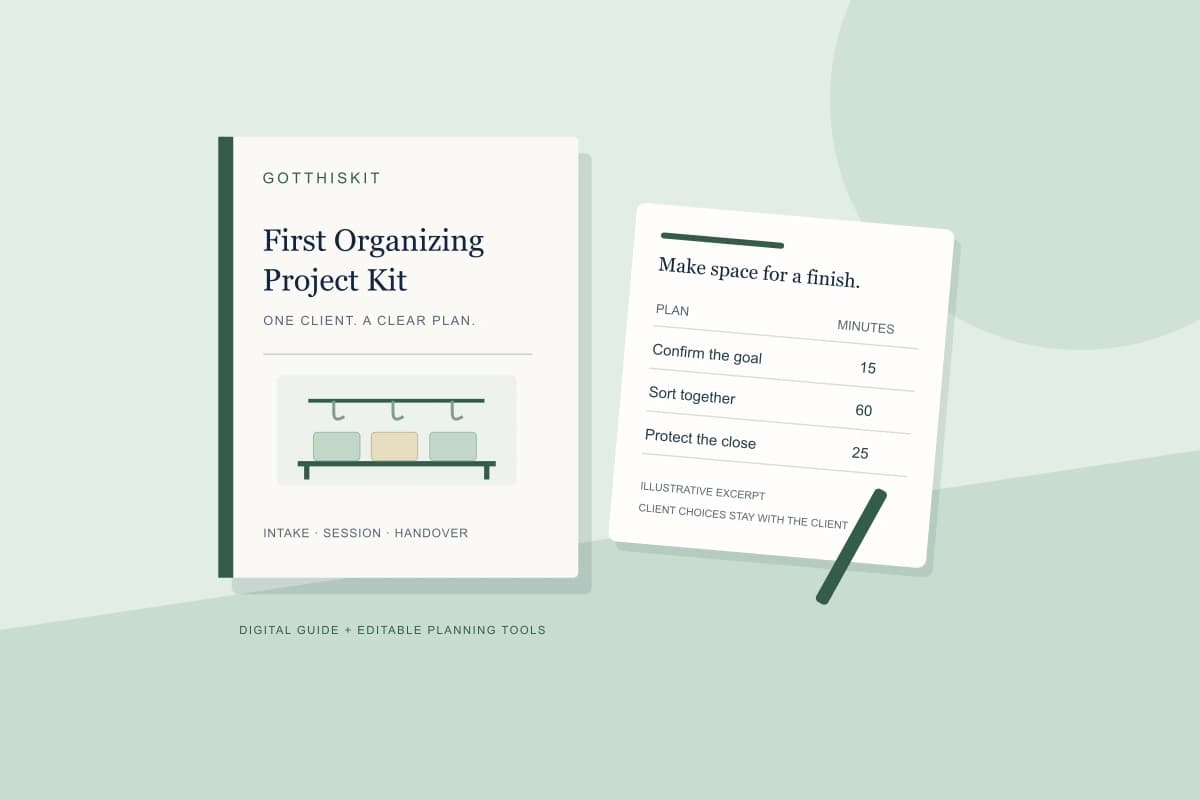
For Morgan, a three-hour appointment is a time boundary to plan within, not a guarantee that every item on the shelf will be resolved. The session-planning article shows how to make space for decisions, testing and a proper close.
6. Close intake with a shared summary and an honest fit decision
Send a concise summary through the agreed private channel: the chosen outcome, exact area, permissions, who participates, session timing and unresolved questions. Invite corrections before you prepare. Keep it separate from any service terms or other documents your business needs; this planning note does not replace a suitable agreement.
Decide whether you can responsibly deliver the proposed work. If the request falls outside your competence, explain the limit and discuss a suitable next step without claiming expertise you do not have. If it fits, prepare only for the agreed first area. Explore the First Professional Organizing Project Kit for further planning and review prompts and its current product details.
Before preparing supplies, write one observable outcome and one clear boundary. Ask the client to confirm both, then record the permissions and unanswered questions that could change the plan.